
The midterms are a day away. Democrats are expected to take the House and have a strong chance at the Senate, but not by enough to override a veto or convict on impeachment. That points to two years of gridlock—no new taxes, and probably no new AI regulation. Markets should like that. The more interesting development, though, is happening off the campaign trail. For the first time since the Ukraine war started, there are clear signals that the fighting in Ukraine could be moving toward an end.
Zelensky & Putin signals
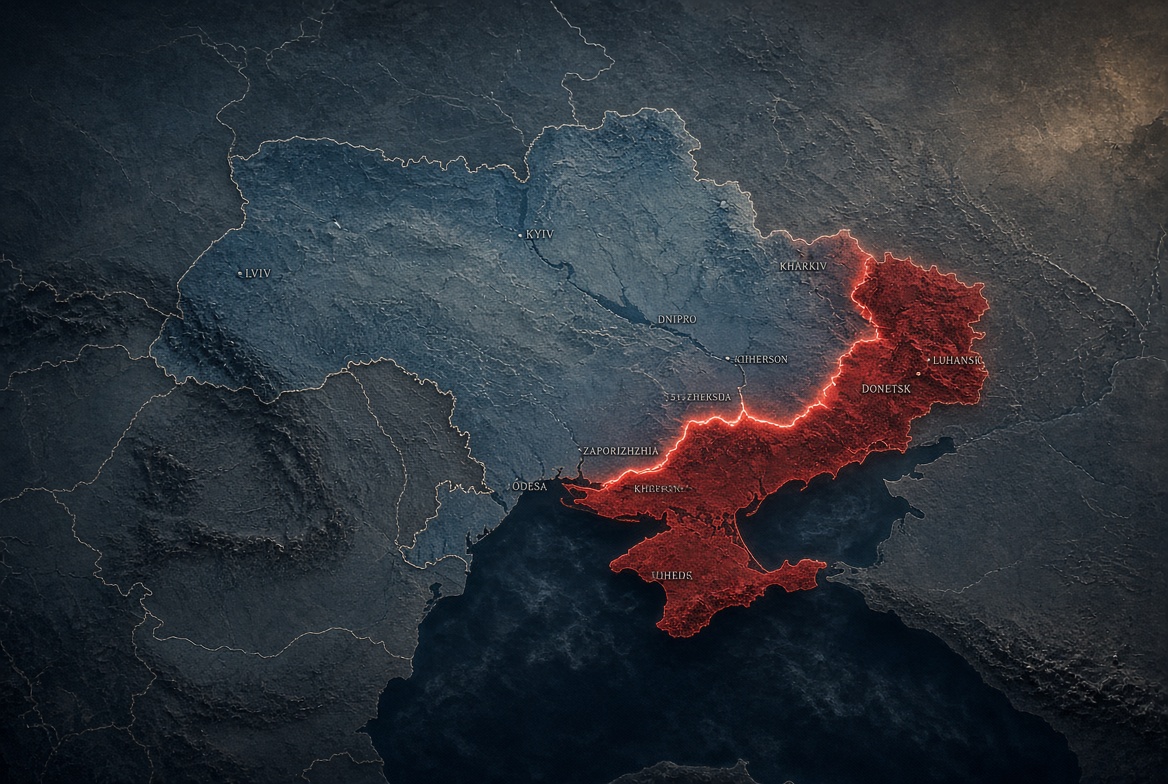
On Fox & Friends on October 21, 2026, Zelensky said Ukraine is prepared to freeze the front line as the realistic path to ending the fighting. His words: “Right now, we have to freeze, and I think this is a real way to end this war. We call it ceasefire or ‘stop killing’ as President Trump called it. Freeze and stop.” He still rejects legal recognition of the occupied territory (he puts Russian control at about 19% of the country) and wants future security guarantees, but he has moved off the earlier insistence on full territorial recovery before any halt. This is a big change.
Putin, after meeting US envoy Steve Witkoff on October 21st, signaled willingness in principle to resume trilateral talks (US-Russia-Ukraine) starting November 10th, focused on post-conflict security arrangements. Trump has wanted an end to the war for some time and has applied pressure in both directions—lifting some restrictions on Russian diesel sales while still backing Ukraine enough to keep Kyiv at the table. When both leaders start talking about freezing lines and post-war security guarantees rather than new offensives, my sense is that something has shifted.
Why Now?
All economic activity is energy that has been transformed into something useful. The last four years have tested that idea. Iran is extracting a monetary toll—formal or informal—from Gulf Cooperation Council producers to move oil and natural gas through Hormuz toward Asia. Shipping costs on Gulf crude to Asia are five times pre-war levels as no one wants their ship blown up by Iranian drones. Flows have partially recovered through bypass pipelines and escorted or permitted transits, but at a steep premium that embeds itself in global prices. This alone has been an extra drag on economic output.
China initially slowed imports when the war began, then increased them as discounted barrels became available and its own energy security calculations evolved. Other emerging-market importers primarily responded by rationing or curtailing use—shorter workweeks, fuel limits, reduced power generation. Europe and the US largely did not. They cushioned the initial price spike by drawing down strategic reserves and commercial stocks. Those stockpiles are now thin, creating urgency for resolution in one or both of the world’s hotspots.
European natural gas storage sits near 74–75% heading into winter—the lowest level for this time of year since records began around 2011, and well below the five-year seasonal average. For the last few years Europe has purchased a larger share of its natural gas from the Middle East. Since January, prices have roughly tripled as supply dropped. Europe faces a practical choice: continue supporting the Ukraine war at current levels or risk a winter in which storage draws leave little margin for cold weather or further supply disruptions.
Europe is the real decision maker
The decisive variable is Europe’s position. France cannot afford the current level of support (Same Debt Problem, Different Flags: The U.S. and France) and is beginning to acknowledge it, particularly with Marine Le Pen leading the polls for the 2027 presidential election. She has already stated she would maintain financial aid for only six months if elected, then stop it. In Germany, Friedrich Merz faces similar budgetary constraints. Continued gains by the Alternative for Germany party reinforce the pressure. The United Kingdom also faces serious budgetary headwinds as voters begin to question war funding. European leaders still prefer to project solidarity with Ukraine, but money is running low and parties that are gaining ground broadly support cutting funding. Zelensky is probably aware of this landscape and understands this problem heading into 2027. That makes a freeze along current battle lines look like a workable deal.
What investors care about
A freeze or broader settlement would likely mean reduced or lifted sanctions on Russian energy exports. Additional Russian crude and natural gas would reach global markets, limited at first, then ramping up as damaged infrastructure is repaired. This would not instantly refill drained reserves, but it would add barrels at a time when Hormuz risk is already embedded in prices. The first relief would show up in diesel and European gas more than in crude—useful for consumers and for any central bank still watching energy pass-through into inflation.
It would also partially neutralize the leverage Iran is currently exerting. A more reliable Russian supply gives the US and its partners more room to press Tehran on their preferred timeline rather than under acute shortage conditions.
None of this is guaranteed. Talks have collapsed before, and both sides still hold maximalist positions on territory and security guarantees. But the combination of depleted energy reserves, political fatigue in Europe, troop and civilian exhaustion on both sides of the front, and explicit statements from Zelensky and Putin about freezing the lines puts the conflict closer to an off-ramp than it has been in four years. Markets will price the midterms over the coming weeks. The bigger mover would be a Ukraine resolution.
